When is an Offer Not an Offer? Understanding Invitation to Treat in Consumer Contract Law
Specialist PathWay
1 🌐 Introduction: The Hidden Complexity of Shopping
When you walk into a shop and see a product with a price tag, you might assume the shop is offering to sell it to you at that price. Surprisingly, in legal terms, this isn’t true. The distinction between an offer and an invitation to treat is one of the most counterintuitive concepts in consumer law, yet it affects every shopping trip you make. Understanding this difference reveals how contract law protects both businesses and consumers, explaining why shops can refuse to sell you items even when they’re displayed with prices, and why you can’t sue a supermarket if they’ve run out of an advertised product. This investigation explores the terminology, principles, and practical implications of these foundational concepts that govern commercial transactions in everyday life.
💬 Confusion at the Checkout
A customer is surprised when a shop refuses to sell an item at the displayed price
2 🔍 Lexical Breakdown: Core Terms and Meanings
Invitation to treat: This is when a business or person shows that they are willing to talk about making a deal, but they are not yet making a firm promise to sell something. It is an invitation for others to make an offer. Shop displays, advertisements, and catalogues are usually invitations to treat, not legal offers.
*Example*: “The items in the shop window are just an invitation to treat – the shop can still refuse to sell them to you.”
*Register note*: This is formal legal terminology used in contract law. In everyday conversation, people would simply say “the shop is showing what they have” or “it’s just a display.”
Offer: A clear statement that you are willing to do something or give something under specific conditions. In legal terms, an offer must be definite and show intention to create a binding contract if the other person accepts it.
*Example*: “When you take an item to the checkout and present it for payment, you are making an offer to buy it.”
*Register note*: This word has both everyday meanings (“Can I offer you a coffee?”) and precise legal meanings in contract law.
Consumer law: The rules and regulations that protect people who buy goods and services. These laws ensure fair treatment, honest advertising, and safe products.
*Example*: “Consumer law prevents shops from displaying one price and then charging a different, higher price at the till.”
*Register note*: Formal legal/business terminology, though the concept is discussed in everyday contexts when people talk about their rights as shoppers.
Contract law: The area of law that deals with agreements between people or organizations. It sets out when an agreement becomes legally enforceable and what happens if someone breaks their promise.
*Example*: “According to contract law, a binding agreement needs an offer, acceptance, and something of value exchanged between both parties.”
*Register note*: Formal legal terminology used by lawyers, in legal education, and in business contexts.
Binding contract: An agreement that the law will support and make people follow. If someone breaks a binding contract, the other person can take legal action.
*Example*: “Once the shop accepts your payment, you’ve entered into a binding contract and they must give you the item.”
Acceptance: When someone agrees to an offer under the same conditions that were proposed. This creates a binding contract.
*Example*: “The shop’s acceptance of your payment completes the contract – they can’t change their mind after that.”
Contractual obligation: A duty or responsibility that someone must fulfill because they agreed to it in a contract.
*Example*: “The seller has a contractual obligation to deliver the goods in the condition described.”
Revoke: To officially cancel or take back an offer or agreement before it has been accepted.
*Example*: “The seller can revoke their offer at any time before you accept it, unless they promised to keep it open.”
*Register note*: Formal term used in legal and business contexts.
Counter-offer: When someone responds to an offer by suggesting different terms. This automatically rejects the original offer.
*Example*: “If the shop says ‘I can’t do £50, but I’ll accept £60,’ that’s a counter-offer, not an acceptance.”
Enforceable: Describes an agreement or rule that can be made to happen through legal action.
*Example*: “The contract is only enforceable if both parties provided something of value.”
Consideration: Something of value that each party gives or promises in a contract. Without consideration, an agreement usually isn’t legally binding.
*Example*: “The consideration in a shop purchase is your money in exchange for the goods.”
*Register note*: This is a technical legal term with a specific meaning different from everyday usage (“showing consideration for others”).
💬 Understanding Auction Rules
Two friends discussing how auctions work legally before attending one
3 📚 Word Family and Variants
Offer family:
– Offer (noun/verb): “I made an offer” / “They offered me a discount”
– Offering (noun): “The shop’s offering includes electronics and furniture” (what is available)
– Offeror (noun, legal): The person making the offer
– Offeree (noun, legal): The person receiving the offer
Contract family:
– Contract (noun/verb): “We signed a contract” / “They contracted to deliver by Friday”
– Contractual (adjective): “Contractual obligations must be honoured”
– Contractor (noun): A person or company that agrees to do work under a contract
– Subcontract (verb/noun): To give part of contracted work to another party
Treat (in legal context):
– Treat (verb): To deal with or handle something
– Treatment (noun): The way something is handled
– Treaty (noun): A formal agreement between countries (related etymologically)
Note: Invitation to treat is a fixed legal phrase – you cannot say “invitation to treatment” in this context.
Bind family:
– Bind (verb): “This agreement will bind both parties”
– Binding (adjective): “A binding contract”
– Bound (past participle/adjective): “You’re bound by the terms you agreed to”
– Unbinding (adjective, rare): Not creating legal obligation
Accept family:
– Accept (verb): “I accept your offer”
– Acceptance (noun): “Your acceptance creates a contract”
– Acceptable (adjective): “Those terms are acceptable”
– Unacceptable (adjective): “That price is unacceptable”
Common prefixes and suffixes:
– Non-binding: Not creating legal obligation (“a non-binding agreement”)
– Pre-contractual: Before a contract is formed (“pre-contractual negotiations”)
– Counter-offer: An offer made in response to another offer
– Enforceable/Unenforceable: Can/cannot be made to happen through law
– Contractually: In a way that relates to a contract (“contractually obliged”)
💬 Negotiating Terms
A business meeting where two parties are trying to reach a contractual agreement
4 🔗 Collocations and Combinations
Make an offer: To propose terms for an agreement.
*”When you take goods to the checkout, you make an offer to purchase them.”*
Accept an offer: To agree to the terms proposed.
*”The shop accepts your offer when they take your payment.”*
Withdraw an offer: To take back an offer before it’s been accepted.
*”The seller can withdraw an offer at any time before acceptance.”*
Reject an offer: To refuse the terms proposed.
*”If you make a counter-offer, you automatically reject the original offer.”*
Enter into a contract: To become part of a binding agreement.
*”Both parties enter into a contract when offer and acceptance coincide.”*
Binding agreement: An agreement that creates legal obligations.
*”A binding agreement requires offer, acceptance, and consideration.”*
Contractual obligation: A duty created by a contract.
*”The retailer has a contractual obligation to provide goods as described.”*
Contractual terms: The specific conditions in a contract.
*”You should read the contractual terms carefully before signing.”*
Legal offer: An offer that meets the requirements to form a contract.
*”A price tag is not a legal offer – it’s an invitation to treat.”*
Subject to availability: A phrase meaning the offer depends on items being in stock.
*”All advertised products are subject to availability.”*
At the seller’s discretion: Meaning the seller can decide whether to accept.
*”Acceptance of your offer is at the seller’s discretion.”*
Terms and conditions: The detailed rules governing a contract.
*”The terms and conditions explain both parties’ rights and responsibilities.”*
Reserve price: The minimum price a seller will accept (especially at auctions).
*”The painting didn’t sell because bidding didn’t reach the reserve price.”*
Legally binding: Creating obligations that law will enforce.
*”Once both parties sign, the contract becomes legally binding.”*
Valid contract: A contract that meets all legal requirements.
*”For a valid contract, you need offer, acceptance, consideration, and intention to create legal relations.”*
5 🤔 Metaphors & Idioms
Contract law and consumer law use relatively few metaphorical expressions, as precision is essential in legal language. However, some figurative phrases do appear:
“The ball is in your court”: Used to indicate that someone must now respond to an offer or proposal. *”I’ve made my offer – the ball is in your court now.”*
“Set in stone”: Describes contractual terms that cannot be changed. *”Once we sign, these terms are set in stone.”*
“Fine print”: Refers to detailed terms and conditions, often in small text, that people might overlook. *”Always read the fine print before entering into a contract.”*
“Seal the deal”: To finalize an agreement and create a binding contract. *”Let’s seal the deal with a handshake and a signature.”*
For learners, it’s important to recognize that while these expressions are common in business English, formal legal documents avoid metaphorical language. Understanding these idioms helps with comprehension when native speakers discuss contracts informally, but learners should use precise legal terminology in formal contexts. Receptive knowledge (understanding when you hear or read these phrases) should develop before productive use (saying or writing them yourself), as using idioms inappropriately can create confusion in legal and business settings where clarity is paramount.
Member-Exclusive Vocabulary Review & Acquisition System
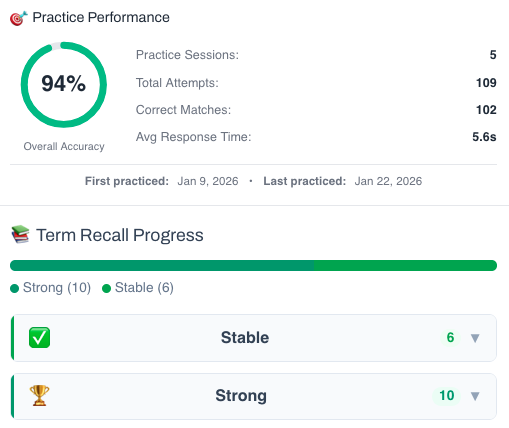
This isn’t a simple quiz — it’s a fully tracked learning system. You build knowledge through recognition, then recall, and your progress feeds directly into the Integrated Practice Bar (Writing tasks, AI Chat, and more).
- Practice sessions, accuracy, and response-time tracking
- Term strength levels (Learning → Stable → Strong)
- Personal progress history for each unit
This feature is available to YSP members.
Explore Membership Benefits🎮 Practice Games
Sentence Scrambler
When is an offer not an offer: Invitation to Treat and other Consumer Contract Law – Sentence Scramble
Member-Exclusive Sentence Builder
Reconstruct scrambled sentences to practice word order and develop your grammar intuition.
This feature is available to YSP members.
Explore Membership Benefits