New Year's Eve Celebrations: Traditions Across Europe and Beyond
Core PathWay
1 🌐 Introduction to New Year's Eve Celebrations
Every year on December 31st, people around the world gather around to ring in the new year with spectacular celebrations. In Spain, crowds fill the public square at Puerta del Sol in Madrid to count down the final seconds before midnight, eating twelve grapes for good luck. Meanwhile, in Scotland, the tradition of Hogmanay involves people singing and making toasts with champagne as fireworks light up the sky. Many families dress up in their best clothes and stay up past midnight to see in the new year together. Some people set off sparklers in their gardens, while others attend large parties where hosts hand out party poppers and noisemakers. Whether you’re watching the countdown on television or celebrating in a crowded street, New Year’s Eve brings people together through shared customs and the hope of fresh beginnings.
Key Terms
💬 Planning a New Year's Party
Two friends discussing preparations for a New Year's Eve party at home
2 🔬 The Key Phrases you need for New Year's Eve Celebrations
Dress up – to put on special or formal clothes for an occasion
*Example: We always dress up for New Year’s Eve and wear our smartest outfits.*
Count down – to say numbers backwards from a higher number to zero, especially before an important event
*Example: Everyone counts down from ten to zero before the new year begins.*
Set off – to make something start working or exploding, especially fireworks
*Example: They set off amazing fireworks at midnight in the city centre.*
Ring in – to celebrate the arrival of something new, especially the new year
*Example: Thousands of people ring in the new year at Times Square every year.*
Stay up – to not go to bed at your usual time, to remain awake
*Example: The children want to stay up until midnight to see the fireworks.*
See in – to be awake and celebrate when something new arrives
*Example: We always see in the new year with our closest friends.*
Let off – to make fireworks or similar things explode
*Example: It’s illegal to let off fireworks in the city without permission.*
Gather around – to come together in a group, usually forming a circle
*Example: Everyone gathers around the television to watch the countdown.*
Cheer on – to shout encouragement or support for someone or something
*Example: The crowd cheers on the performers during the street celebration.*
Light up – to make something bright with lights or to start burning
*Example: Fireworks light up the night sky in every major city.*
Blow up – to fill something with air, or to make something explode
*Example: We need to blow up all these balloons before the guests arrive.*
Hand out – to give something to each person in a group
*Example: The host hands out party hats and noisemakers to all the guests.*
💬 Discussing Cultural Traditions
Two colleagues talking about different New Year's customs from their countries
3 🔍 Other Key Terms for New Year's Eve Celebrations
New Year’s Eve – the last day of the year, December 31st
*Example: New Year’s Eve is one of the biggest celebration nights of the year.*
Celebration – a special event or party for an important occasion
*Example: The celebration lasted until three in the morning.*
Resolution – a promise you make to yourself to do something differently in the new year
*Example: My New Year’s resolution is to exercise more and eat healthier food.*
Confetti – small pieces of coloured paper thrown at celebrations
*Example: After midnight, confetti covered the streets of the city.*
Balloons – rubber bags filled with air, used as decorations at parties
*Example: The room was full of gold and silver balloons.*
Streamers – long, thin pieces of coloured paper used as decorations
*Example: We hung streamers from the ceiling for the party.*
Superstition – a belief that certain actions bring good or bad luck
*Example: In some countries, there’s a superstition that you should kiss someone at midnight.*
Bell – a metal object that makes a ringing sound when hit
*Example: Church bells ring across the city at midnight on New Year’s Eve.*
Clock tower – a tall building with a large clock on it
*Example: Everyone watches the clock tower as it approaches midnight.*
Host – the person who invites people to their home or organizes an event
*Example: As the host, I need to make sure everyone has food and drinks.*
Guest – a person who is invited to an event or someone’s home
*Example: We’re expecting about twenty guests at our New Year’s party.*
Feast – a large, special meal with lots of different foods
*Example: Many families prepare a feast to enjoy before the midnight countdown.*
💬 Asking About Celebrations
Someone asking a friend about their New Year's plans and traditions
4 🧠 Worth Thinking About
Did you know that in Denmark, people throw old plates at their friends’ doors on New Year’s Eve? The more broken plates you find outside your door, the more friends you have! Meanwhile, in Japan, Buddhist temples ring their bells exactly 108 times to drive away human desires and start fresh. In Edinburgh, Scotland, the Hogmanay celebration includes ‘first-footing’ – the first person to enter your home after midnight should bring gifts like coal, salt, or whisky for good luck. Interestingly, in Spain, eating twelve grapes at midnight – one for each clock chime – is supposed to bring twelve months of prosperity, though many people struggle to eat them fast enough!
Member-Exclusive Vocabulary Review & Acquisition System
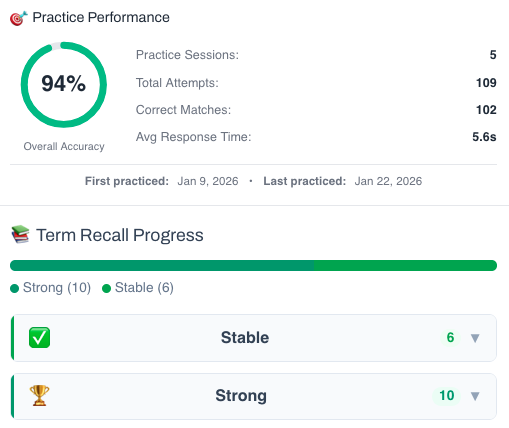
This isn’t a simple quiz — it’s a fully tracked learning system. You build knowledge through recognition, then recall, and your progress feeds directly into the Integrated Practice Bar (Writing tasks, AI Chat, and more).
- Practice sessions, accuracy, and response-time tracking
- Term strength levels (Learning → Stable → Strong)
- Personal progress history for each unit
This feature is available to YSP members.
Explore Membership BenefitsMember-Exclusive Cloze Test
Fill in the gaps to complete authentic passages and reinforce your vocabulary in context.
This feature is available to YSP members.
Explore Membership Benefits