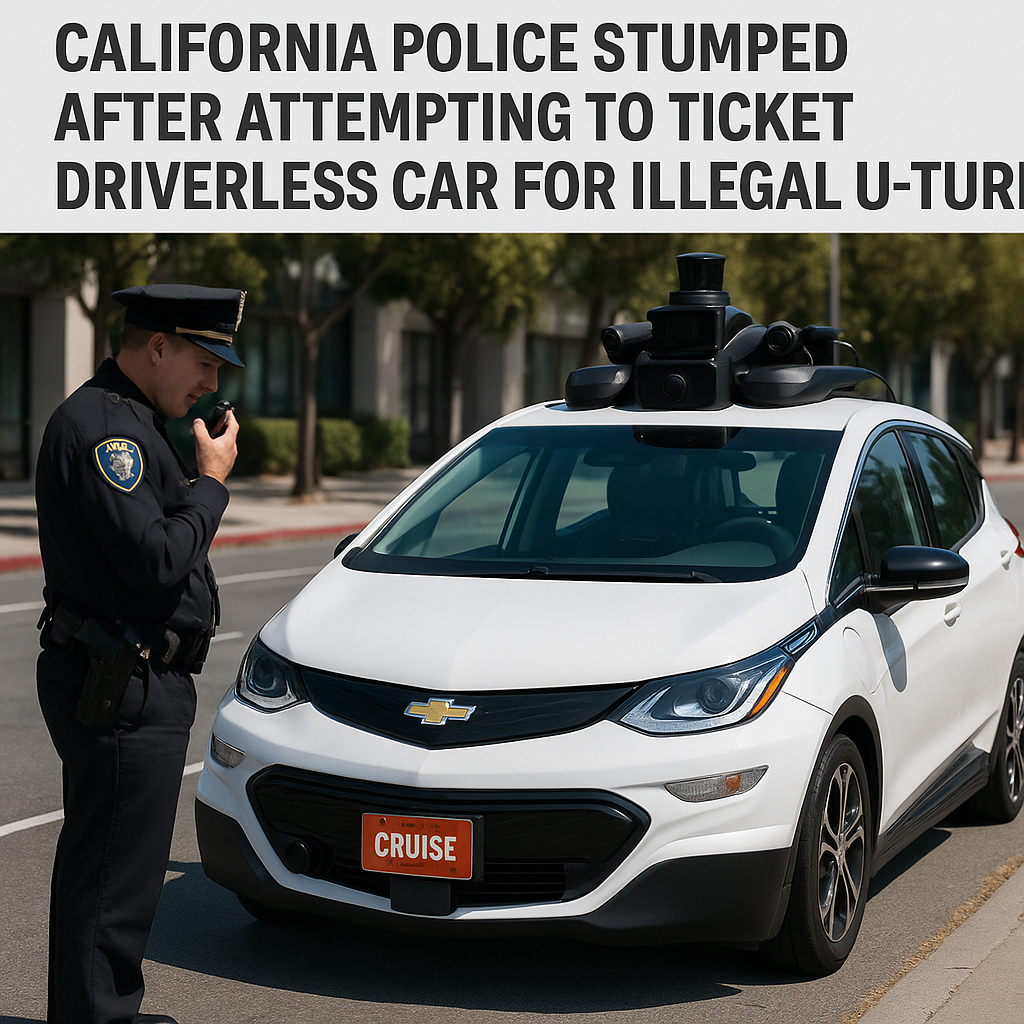
CAN A DRIVERLESS CAR BE FINED
San Bruno officers pull over Waymo but say a ticket wasn’t issued, as ‘citation books don’t have a box for “robot”‘
Listen to a report on this story
📰 California Police Stumped After Attempting to Ticket Driverless Car for Illegal U-Turn (C1)
Test Your Understanding & Learn Vocabulary
Answer each question to reveal its vocabulary explanation:
In the sentence ‘A police department in California grappled with this existential question’, the phrasal verb ‘grappled with’ conveys…
The author’s use of ‘existential question’ in this context suggests…
A ‘legal grey area’ refers to…
The term ‘autonomous vehicle’ specifically denotes…
When officers ‘pulled over’ the vehicle, they…
In a technical context, ‘glitch’ refers to…
When legislation is ‘signed into law’, it means…
A ‘notice of noncompliance’ is…
Having ‘legal recourse’ means…
‘First responders’ refers to…
“The bill was introduced by assemblymember Phil Ting of San Francisco amid several incidents in the city…” The preposition ‘amid’ in this sentence indicates…
The phrase ‘from the outset’ means…
Describing the officers as ‘lenient’ suggests they were…
Vehicles ‘acting erratically’ means they were…
Deploying vehicles ‘at scale’ means…
Grammar Focus: Modal perfects (should have/could have/would have/might have + past participle)
A police department in California grappled with this existential question last week, confronting a legal grey area that legislators should have addressed years ago.
In the sentence ‘legislators should have addressed years ago’, the modal perfect structure expresses…
Grammar Focus: Third conditional and inverted conditionals
Had the legislation been implemented earlier, the San Bruno incident could have been handled with proper legal recourse.
The inverted conditional structure ‘Had the legislation been implemented earlier’ indicates…
Grammar Focus
Modal perfects (should have/could have/would have/might have + past participle)
“A police department in California grappled with this existential question last week, confronting a legal grey area that legislators should have addressed years ago.”
Pattern: modal + have + past participle
Function: Expresses criticism, regret, or hypothetical past situations; evaluates past actions or missed opportunities from present perspective
Contrast with: Simple past (addressed) states what happened; modal perfect (should have addressed) evaluates what didn’t happen but was advisable. Used for counterfactual reasoning and critical analysis.
Third conditional and inverted conditionals
“Had the legislation been implemented earlier, the San Bruno incident could have been handled with proper legal recourse.”
Pattern: Had + subject + past participle, subject + modal perfect | If + past perfect, modal perfect
Function: Expresses hypothetical past situations and their unrealized consequences; used for counterfactual analysis and speculation about alternative past scenarios
Contrast with: Second conditional (If they implemented…, it would…) discusses hypothetical present/future; third conditional discusses impossible past. Inverted form (Had…) is more formal than ‘If…had’ structure.