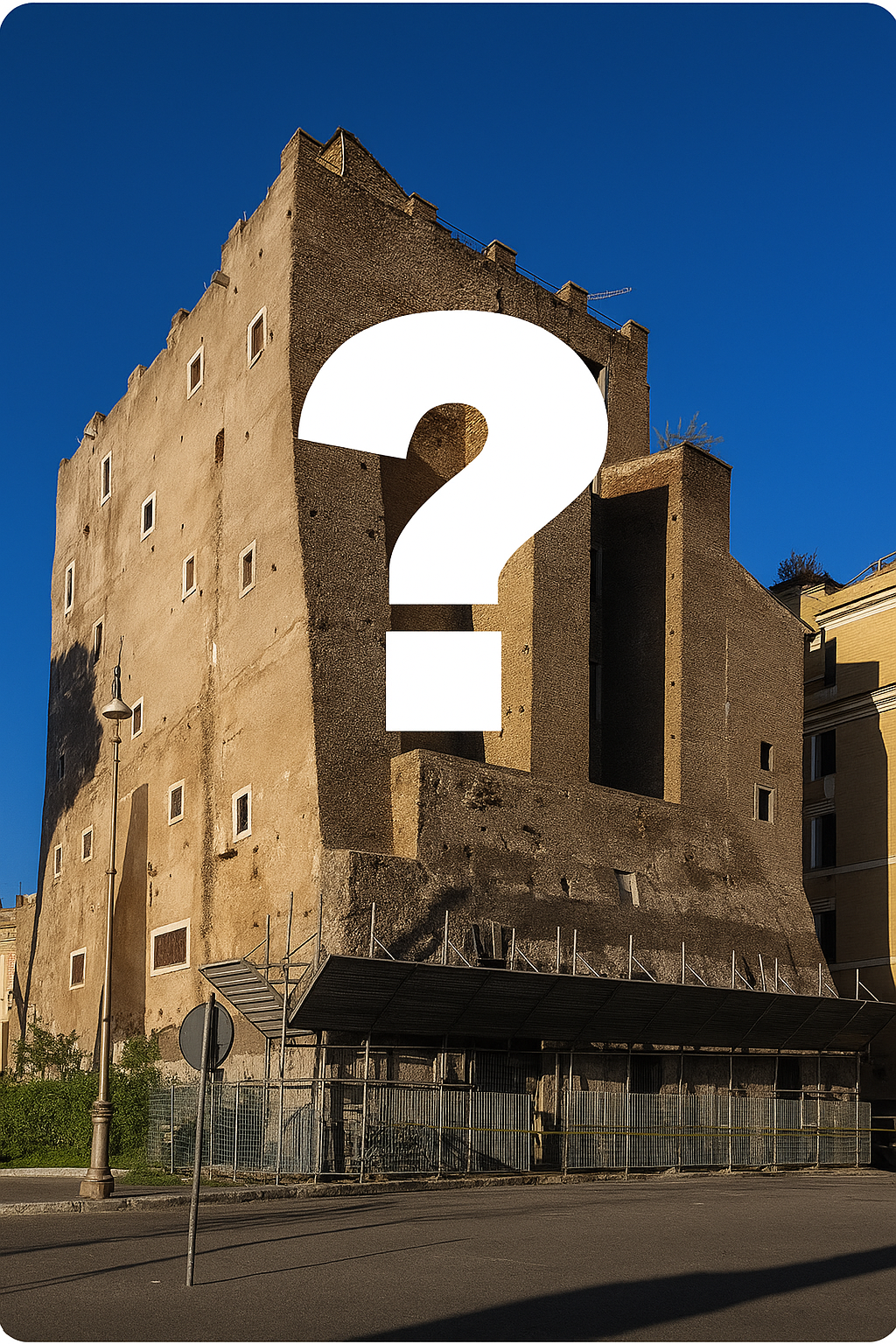
Historic Roman Tower Collapses During Renovation Work (B1/B2)
On a November morning in Rome, renovation workers were inside the Torre dei Conti when the medieval tower began to collapse. Within ninety minutes, two separate structural failures had torn through the building. One Romanian worker lost his life and another was injured. Now, investigators are trying to understand what might have caused an eight-hundred-year-old survivor to suddenly give way.
🎧 Torre Dei Conti Collapse
Comprehension Questions
Answer these questions based on the audio you heard.
What happened to the Torre dei Conti on November 3rd, 2025?
When was the Torre dei Conti originally built?
How long did the tower remain empty before renovation work began?
Why did Pope Alexander VIII add buttresses to the tower?
What was the planned purpose of the renovation work?
According to the audio, what are investigators examining as possible causes of the collapse?
Which summary best captures the main points of the audio?
📰 Historic Roman Tower Collapses During Renovation Work (B1/B2)
Test Your Understanding & Learn Vocabulary
Answer each question to reveal its vocabulary explanation:
In the sentence 'Now, investigators are trying to understand what might have caused an eight-hundred-year-old survivor to suddenly give way', what does 'give way' mean?
What does 'structural failure' mean?
In the sentence 'The Torre dei Conti had withstood centuries of earthquakes before this tragedy occurred', what does 'withstood' mean?
What is a 'fortified residence'?
In the sentence 'The devastating earthquake of 1348 destroyed the upper floors', what does 'devastating' mean?
What are 'buttresses'?
In the sentence 'Modern urban development gradually isolated the building from its surroundings', 'isolated' means the building was…
What does 'sat empty' mean?
In the sentence 'In 2022, renovation work finally began after this long period of abandonment', what does 'abandonment' mean?
'Triggered' could be replaced with which word?
In the sentence 'The renovation work itself could have destabilized weakened sections of the ancient structure', what does 'destabilized' mean?
What does 'deterioration' mean?
In the sentence 'Centuries of seismic activity may have created invisible fractures throughout the structure', what is 'seismic activity'?
In the sentence 'These micro-damages might have accumulated over time, leaving the tower more vulnerable than anyone realized', what does 'accumulated' mean?
What does 'overwhelmed' mean in this context?
Grammar Practice
In the sentence 'The renovation work itself could have destabilized weakened sections of the ancient structure', why is 'could have destabilized' used instead of 'destabilized'?
Why is 'had withstood' used in the sentence 'The Torre dei Conti had withstood centuries of earthquakes before this tragedy occurred'?
Reading Comprehension
When was the Torre dei Conti originally built?
What can we infer about why investigators are examining multiple possible causes for the collapse?
⚖️ Past Simple with Maybe/Perhaps vs Modal Perfect for Speculation
⚖️ I'm sure + Past Simple vs Must have / Can't have + Past Participle
Now try these questions:
Which sentence uses modal perfect forms correctly to express speculation about the past?
Complete the sentence: “The lights are off. They _______ home already.”
In the sentence “He can’t have finished the project yet,” what does the modal perfect express?
Which sentence contains an error with modal perfect forms?
Choose the sentence that best expresses weak speculation about a past event:
What is wrong with this sentence: “They mightn’t heard the announcement”?
Which modal perfect form expresses the strongest certainty about a past deduction?
Complete the dialogue: A: “Where’s Sarah?” B: “I’m not sure. She _______ to the library.”
Choose the corrected version of: “He must have not understood the instructions.”
Which sentence correctly uses “can’t have + past participle” for deduction?
In which situation would you use “might have + past participle”?
What does this sentence mean: “She may have left early”?
Which sentence shows correct word order for a negative modal perfect form?
Why is “must have + past participle” used instead of “must + infinitive” in this context: “The ground is wet. It must have rained last night”?
Choose the most appropriate response using modal perfect forms: A: “Why didn’t Tom come to the party?” B: “_______”
Challenge Yourself! Try listening to the C1 level version of the story
You already know the story, but the C1 version has some different terms and more complex grammar forms.
Listening to the same basic content but with higher complexity levels and a quicker speed is a FAST way to build your listening skills.