Food Park Italy (B1B2)
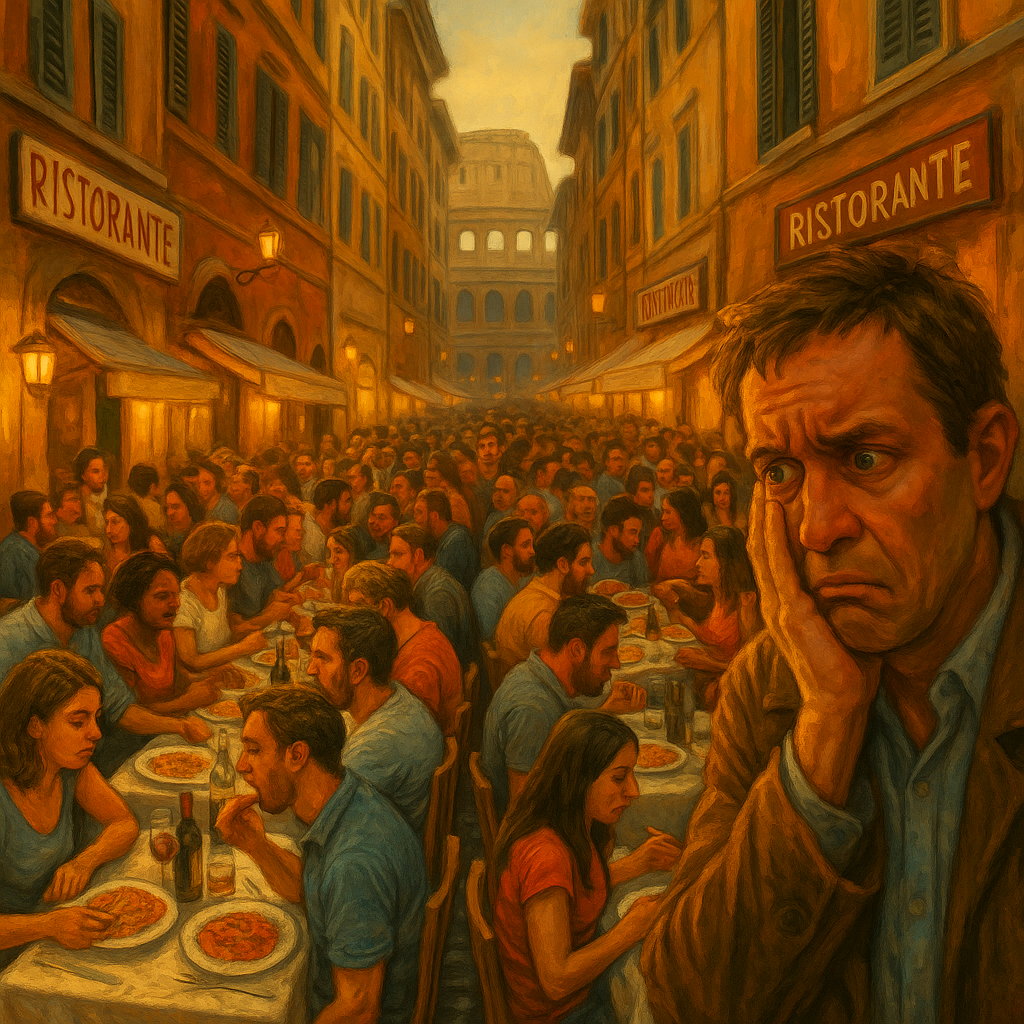
When Too Much Pasta Becomes a Problem: Italian Cities Fight Food Tourism Overload – Imagine this scene: thirty-one restaurants packed onto a single street in Palermo, Sicily. Bright orange Aperol spritzes on every table. Deep-fried rice balls and cannoli everywhere you look. For tourists, it’s paradise. However, for the mayor of Palermo, it was finally too much. He’s banned new restaurants from opening in the historic center. And he’s not alone in taking this action.
Listen to part 1 of the article
Comprehension Questions
Answer these questions based on the audio.
What is the main concern that has led Italian cities to restrict new restaurant openings?
By how much did tourist arrivals to Palermo increase in the five years following UNESCO recognition?
Listen to part 2 of the article
Comprehension Questions
Answer these questions based on the audio you heard.
What is the main concern that prompted Palermo’s mayor to ban new restaurants in the historic center?
By how much did the number of restaurants in Palermo’s historic center change over a ten-year period?
What significant event in 2015 contributed to the surge in tourism to Palermo?
What term have experts created to describe the food-based transformation of Italian city centers?
What percentage of Italy’s economy does tourism now represent?
Which summary best captures the main points of the audio?
Read the article for a more detailed understanding
📰 When Too Much Pasta Becomes a Problem: Italian Cities Fight Food Tourism Overload (B1/B2)
Test Your Understanding & Learn Vocabulary
Answer each question to reveal its vocabulary explanation:
In the sentence ‘thirty-one restaurants packed onto a single street’, what does ‘packed’ mean?
When the mayor has ‘banned’ new restaurants, he has…
In the phrase ‘too much sugar spoils the coffee’, ‘spoils’ means…
What does ‘authenticity’ refer to in this article?
A ‘display window’ is…
If someone feels ‘frustration’, they feel…
When a city center ’empties out’, it…
A ‘turning point’ is…
‘phenomenon’ means…
When someone ‘captures’ a contradiction, they…
To ‘convert’ something means to…
When businesses ‘take advantage of’ an opportunity, they…
When critics ‘point to’ a problem, they…
To ‘acknowledge’ something means to…
When someone refers to ‘the struggle’, they mean…
Grammar Practice
Why does the article say ‘He’s banned new restaurants’ instead of ‘He banned new restaurants’?
The word ‘However’ at the beginning of this sentence is used to…
Reading Comprehension
According to the article, what did UNESCO do in 2015 that affected Palermo?
What can we infer about the tour guide’s situation from the article?
Grammar Focus Questions: Connectors for Contrast – Present Perfect/Past Simple
Which sentence uses “however” correctly?
Complete the sentence: “_____ the high cost, they decided to buy the house.”
Which sentence correctly uses “in spite of”?
What is wrong with this sentence? “The project was difficult, however, we completed it on time.”
In this sentence, “despite” is used to express: “Despite the rain, the concert was a success.”
Choose the sentence with correct punctuation for “however”:
Which option correctly completes: “_____ his lack of experience, he got the job.”
What is the difference between these sentences? A: “Despite the noise, I slept well.” B: “There was noise. However, I slept well.”
Which sentence contains an error with “despite”?
Choose the most appropriate response: “The restaurant had terrible reviews.” → “_____, we decided to try it.”
Which sentence shows correct word order for “however”?
Complete with the correct form: “_____ the fact that he apologized, she’s still angry.”
Which sentence is grammatically correct?
Why is “however” used in this sentence instead of “despite”? “The plan seemed perfect. However, it failed completely.”
Choose the corrected version of: “Despite of working hard, he didn’t get promoted.”
Present Perfect / Past Simple
Which sentence uses the present perfect correctly to announce news?
Complete the sentence: “Scientists _______ a breakthrough in cancer research.”
Which sentence contains an error with the present perfect?
A: “Have you heard the news?” B: “Yes, I _______ about it this morning.”
In this sentence, why is the present perfect used? “The government has introduced new tax reforms.”
Which sentence correctly provides details about the news “A famous actor has died”?
What is wrong with this sentence? “I have seen the accident at 3 o’clock.”
Choose the correct response: “Did you hear about the earthquake?” “Yes, it _______ at 2 a.m. last night.”
Which sentence best announces breaking news?
Complete the news report: “Police _______ three suspects. The arrests _______ place early this morning.”
Why is the past simple used in this sentence? “The fire started at midnight and destroyed the entire building.”
Which sentence is grammatically correct?
Choose the corrected version: “The mayor has opened the new library yesterday.”
In which situation would you use the present perfect?
A: “There’s been a major storm.” B: “Really? When _______ it _______?”