Agreeing and Disagreeing: Essential Language
Core PathWay
1 Why Agreement Language Matters
When we talk with other people, we need to show our opinions clearly. Sometimes we agree with someone. This means we think the same thing. Sometimes we disagree. This means we think different things. But sometimes we agree with part of an idea, not all of it. This is called partial agreement. If we don’t show our opinion clearly, people don’t understand us. They don’t know if we say yes or no. This creates problems at work and in daily life. Look at these short dialogues. Can you understand if Person B agrees or not?
Dialogue 1:
Person A: The new office is too small.
Person B: Well, it’s different from the old one.
Dialogue 2:
Person A: We should start the meeting at 9am.
Person B: That’s one way to do it.
Dialogue 3:
Person A: This project will take three weeks.
Person B: I see what you mean.
In all three dialogues, Person B doesn’t say yes or no clearly. We don’t know their real opinion. This is why we need to learn clear agreement and disagreement language. We need to be polite, but we also need to be clear. In this lesson, you will learn how to do both things.
2 The Verbs: Agree and Disagree
The two most important verbs for this topic are agree and disagree. These verbs help you show your opinion clearly. You need to learn how to use them correctly. Many learners make mistakes with these verbs. The most common mistake is saying ‘I am agree’. This is WRONG. Never say ‘I am agree’. The correct form is ‘I agree’. We will also learn how to use adverbs to change the level of agreement. And we will learn which prepositions to use after these verbs.
agree
- I agree with you
- I agree about the plan
- Do you agree?
- I don’t agree
- I fully agree
- I strongly agree
- I partially agree
- I agree with Tom about the new schedule.
- Do you agree with this idea?
disagree
- I disagree with you
- I disagree about that
- We disagree
- I strongly disagree
- I completely disagree
- I disagree with Maria about the budget.
- They disagree about the start time.
fully
- I fully agree
- I fully understand
- fully support
- I fully agree with your idea.
- She fully supports the new plan.
partially
- I partially agree
- partially correct
- partially finished
- I partially agree with your plan.
- The report is partially finished.
strongly
- I strongly agree
- I strongly disagree
- strongly believe
- feel strongly
- I strongly disagree with that decision.
- We strongly believe this is the right choice.
3 Partial Agreement and Giving Opinions
Sometimes you agree with part of an idea, but not all of it. In English, we have special phrases for this. These phrases help you be polite and clear at the same time. The most common phrase is ‘I agree up to a point‘. This means you agree with some parts. Another useful phrase is ‘I agree with most of what you say‘. This shows you listened carefully and found good points.
You can also use patterns with ‘but’ to show partial agreement. For example: ‘I agree, but I also think that…‘ This pattern shows agreement first, then adds your different idea. Another pattern is ‘You have a point, but…‘ This is very polite. It shows you respect the other person’s idea before you add your opinion.
Agreement and disagreement language connects closely with opinion language. When you agree or disagree, you often need to give your opinion too. The two most common verbs for opinions are ‘think‘ and ‘believe‘. We use ‘think’ for general opinions: ‘I think the meeting is too long’. We use ‘believe’ for stronger opinions: ‘I believe this plan will work’. Both verbs work the same way: I think / You think / She thinks / We think / They think. Negative forms: I don’t think / She doesn’t think. Question forms: Do you think? / Does he believe?
Here are some complete examples:
– I agree up to a point, but I think we need more time.
– I agree with most of what you say, but I believe the cost is too high.
– You have a point, but I also think we should ask the team first.
– I partially agree. I think the idea is good, but I don’t think it will work now.
These patterns help you sound polite and professional. You show respect for other opinions. But you also make your own opinion clear.
Key Terms
4 A Meeting: Reaching Agreement
Four managers are in a meeting. They need to make a decision about office hours. The company wants to start work at 8am instead of 9am. The managers have different opinions. Read how they use agreement and disagreement language.
Manager A: I think we should start at 8am. It will help us finish work earlier.
Manager B: I disagree with that idea. I think our team will be very tired in the morning.
Manager C: I agree with Manager B up to a point. Some people will be tired. But I also think it’s good for families. People can go home earlier.
Manager D: You have a point, Manager C. I partially agree. But I believe we need to ask the team first. We can’t decide without them.
Manager A: I fully agree with that. Let’s ask the team next week.
Manager B: Yes, I agree. That’s a good plan.
Manager C: I agree too. We will send a message to everyone today.
Manager D: Perfect. I’m happy we all agree now.
Notice how the managers use different phrases. Manager B uses strong disagreement first. Manager C uses partial agreement to be polite. Manager D suggests a new idea that everyone likes. By the end, they all agree. They used clear language to reach a good decision together.
5 Key Points to Remember
You learned important language for agreeing and disagreeing today. Remember these key points. First, never say ‘I am agree’. Always say ‘I agree’. Use ‘with’ for people and ideas. Use ‘about’ for topics. Second, you can change the level of agreement with adverbs. Use ‘fully‘ or ‘strongly‘ for complete agreement. Use ‘partially‘ for some agreement. Third, partial agreement phrases help you be polite. Try ‘I agree up to a point‘ or ‘You have a point, but…’. These phrases show respect and clarity. Finally, connect agreement language with opinion verbs. Use ‘I think‘ for general opinions. Use ‘I believe‘ for strong opinions. Practice these patterns in your daily conversations. You will sound more natural and professional.
🎮 Practice
Member-Exclusive Vocabulary Review & Acquisition System
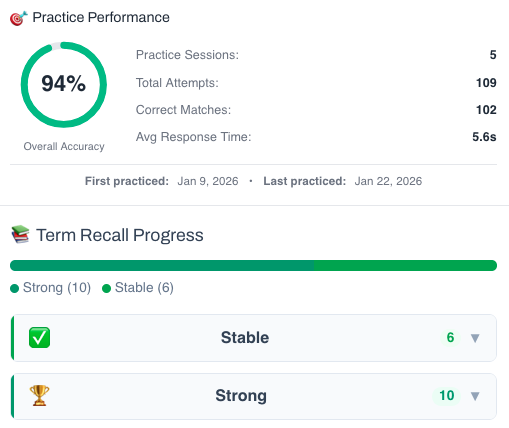
This isn’t a simple quiz — it’s a fully tracked learning system. You build knowledge through recognition, then recall, and your progress feeds directly into the Integrated Practice Bar (Writing tasks, AI Chat, and more).
- Practice sessions, accuracy, and response-time tracking
- Term strength levels (Learning → Stable → Strong)
- Personal progress history for each unit
This feature is available to YSP members.
Explore Membership BenefitsMember-Exclusive Practice Bar
Access a wide range of integrated practice for this unit — from Vocabulary and Grammar activities to AI-curated Writing tasks and Thematic Chat practice.
This feature is available to YSP members.
Explore Membership BenefitsMember-Exclusive Sentence Builder
Reconstruct scrambled sentences to practice word order and develop your grammar intuition.
This feature is available to YSP members.
Explore Membership Benefits