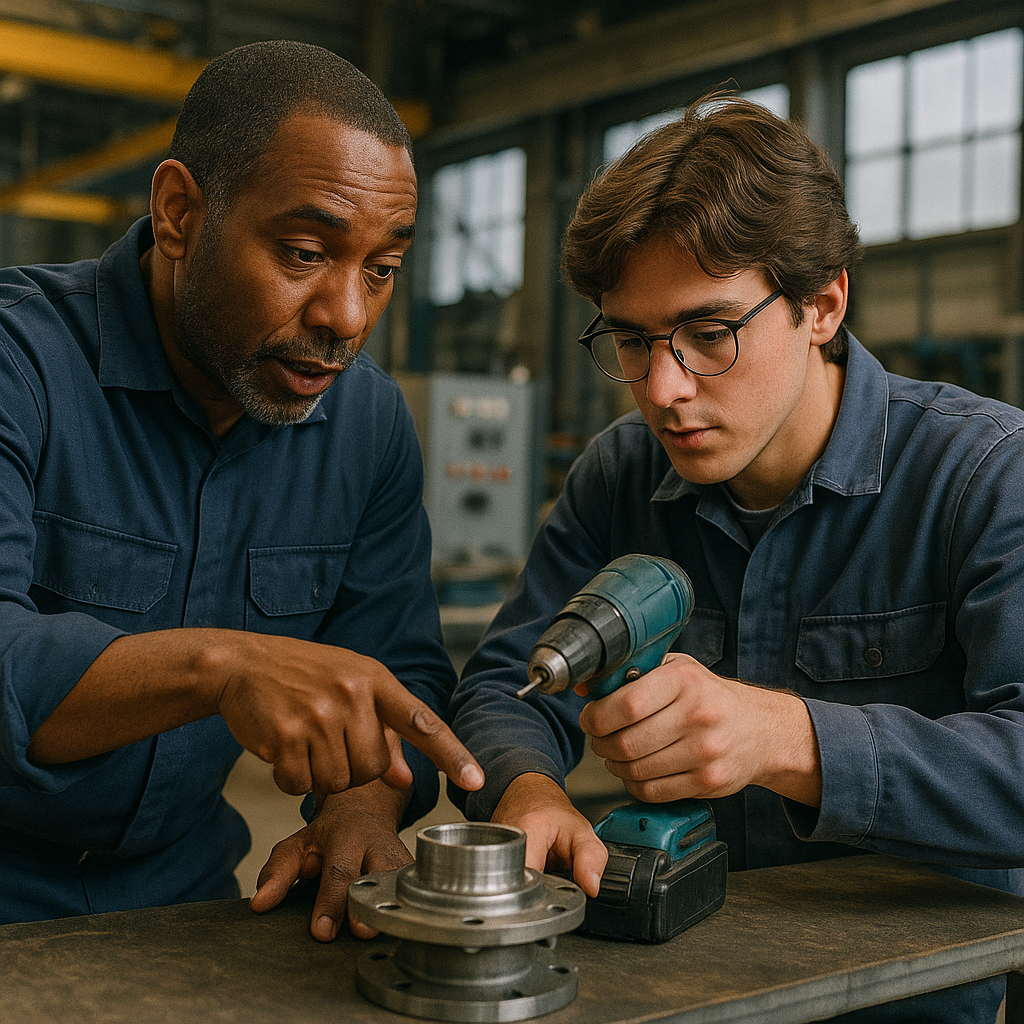
LEARNING BY DOING
Effective workplace learning doesn't happen in classrooms or online libraries. It requires hands-on practice, peer teaching, and the right support systems—backed by brain science that shows why struggle and repetition matter more than convenience.
🎧 Learning By Doing – A2 – Part 1
Comprehension Questions
Answer these questions based on the audio.
What is the main focus of the audio?
Why do Orange engineers learn while working instead of going to training courses?
🎧 Learning By Doing – A2 – Part 2
Comprehension Questions
Answer these questions based on the audio.
What is the main focus of the audio?
What does Immersive create to help clients prepare?
📰 Why Learning by Doing Works: The Science of Learning New Skills (A2)
Test Your Understanding & Learn Vocabulary
Answer each question to reveal its vocabulary explanation:
In the sentence 'Workers need to practice with their hands', what does 'practice with their hands' mean?
What does 'brain science' mean?
What is a 'mentor'?
In the sentence 'They keep their job security', what does 'job security' mean?
What does 'tick boxes' mean?
In the sentence 'But these libraries struggle to attract users', what does 'struggle to' mean?
What does 'get involved' mean?
In the sentence 'The brain then shows us our knowledge gaps', what are 'knowledge gaps'?
What does 'swap skills' mean?
In the sentence 'The brain processes information while we rest', what does 'process information' mean?
What does 'chunks' mean?
In the sentence 'This allows reflection', what does 'reflection' mean?
What is 'working memory'?
In the sentence 'But what about high-risk roles?', what does 'high-risk' mean?
What are 'mock attacks'?
Grammar Practice
In the sentence 'Workers need to practice with their hands', the present simple is used to express:
In the sentence 'When we explain concepts, our brain works harder', the word 'when' shows that:
Reading Comprehension
According to the article, what do mentors do?
Why does the article suggest breaking training into chunks?
Grammar Review
Now Try These Questions:
Which sentence is correct?
Complete the sentence: They _____ football on Saturdays.
Which sentence expresses a habit?
Where should the frequency adverb go? “He _____ late for class.”
Which sentence contains an error?
Complete the sentence: The train _____ at 3pm tomorrow.
Which sentence uses a state verb correctly?
Where does “never” go in this sentence? “She _____ to the gym.”
What is wrong with this sentence? “The shop open at 9am every day.”
Which sentence expresses a general truth?
Complete the sentence: My sister _____ chocolate.
Which sentence is correct for a routine?
What does present simple express in this sentence? “The movie starts at 8pm tonight.”
Which sentence contains an error with word order?
Complete the sentence: I _____ what you mean.